
This is EVA.

You decide what EVA works with. Through your SPACELABS account, you select the materials for a lesson and create access for your class.
When students open EVA using this access, the relevant materials are immediately available. EVA knows the learning context you have provided and can relate questions directly to the current task, the materials and the intended learning goal.
This means the context does not have to be explained again with every question. EVA can provide support that is appropriate to the specific subject matter and learning situation.
A correct answer is not yet a learning process. EVA is therefore designed not to simply reveal the solution. Instead, it first considers what a learner has already understood and where the next step in the learning process becomes difficult.
Depending on the situation, EVA can ask a follow-up question, draw attention to an observation, activate prior knowledge or provide a targeted hint. We have also prepared specific conversation prompts for typical learning situations, allowing EVA to initiate dialogue, stimulate thinking or guide learners back into the process of inquiry.
If that is not enough, the level of support can gradually increase. This creates scaffolding that supports the learning process rather than shortening it. Observing, describing, interpreting, reasoning and transferring remain the learners’ tasks. EVA helps them take the next step themselves.
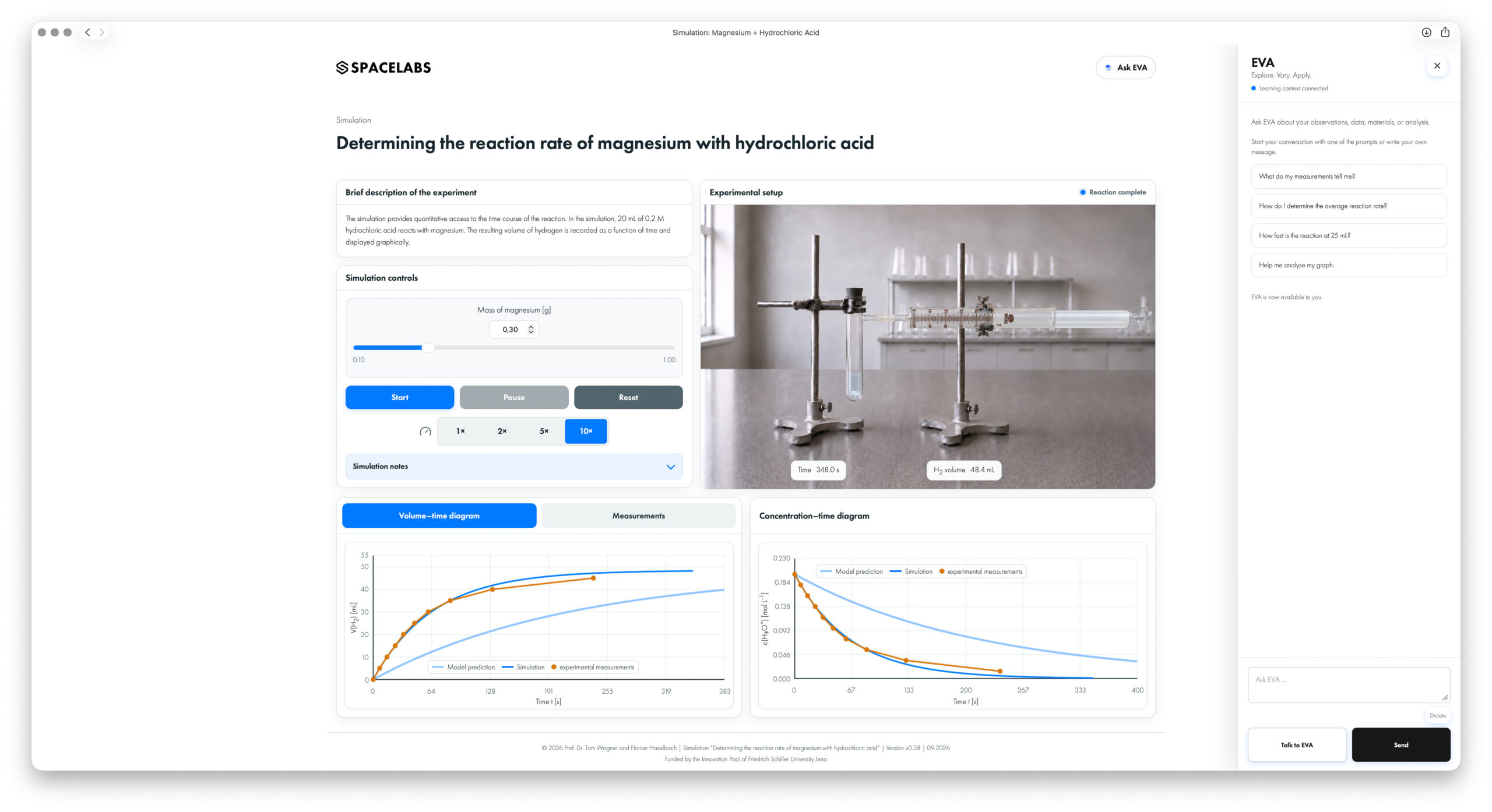
For every learning environment we develop, EVA receives a specific Learning Package. It provides the subject-specific, didactic and methodological foundation.
A Learning Package describes in detail the learning goals, required prior knowledge, scientific models and key conceptual relationships. It defines which observations or measurements can serve as evidence and takes into account common learning difficulties, preconceptions and language-related demands.
It also contains possible learning pathways and different levels of support – from a diagnostic question or a small hint to more extensive scaffolding. Model limitations and meaningful opportunities for transfer are defined as well.
The Learning Package provides the subject-specific and didactic framework within which EVA operates.
Generative AI does not produce responses according to a fixed answer key. Simply testing a few conversations and checking whether the answers sound convincing is therefore not enough.
With the EVA Validation Framework, typical learning situations are described and evaluated systematically. This includes the respective classroom context, a possible learner statement and its didactic interpretation. We then define how EVA should respond appropriately – and what it should deliberately avoid doing.
Central to this is our didactic response corridor. EVA’s response must be scientifically accurate, take the context into account, match the learner’s current level, avoid revealing solutions prematurely and support the next step in the learning process.
Instead of relying on whether an answer merely sounds plausible, we systematically evaluate whether EVA acts within the intended scientific and didactic framework.
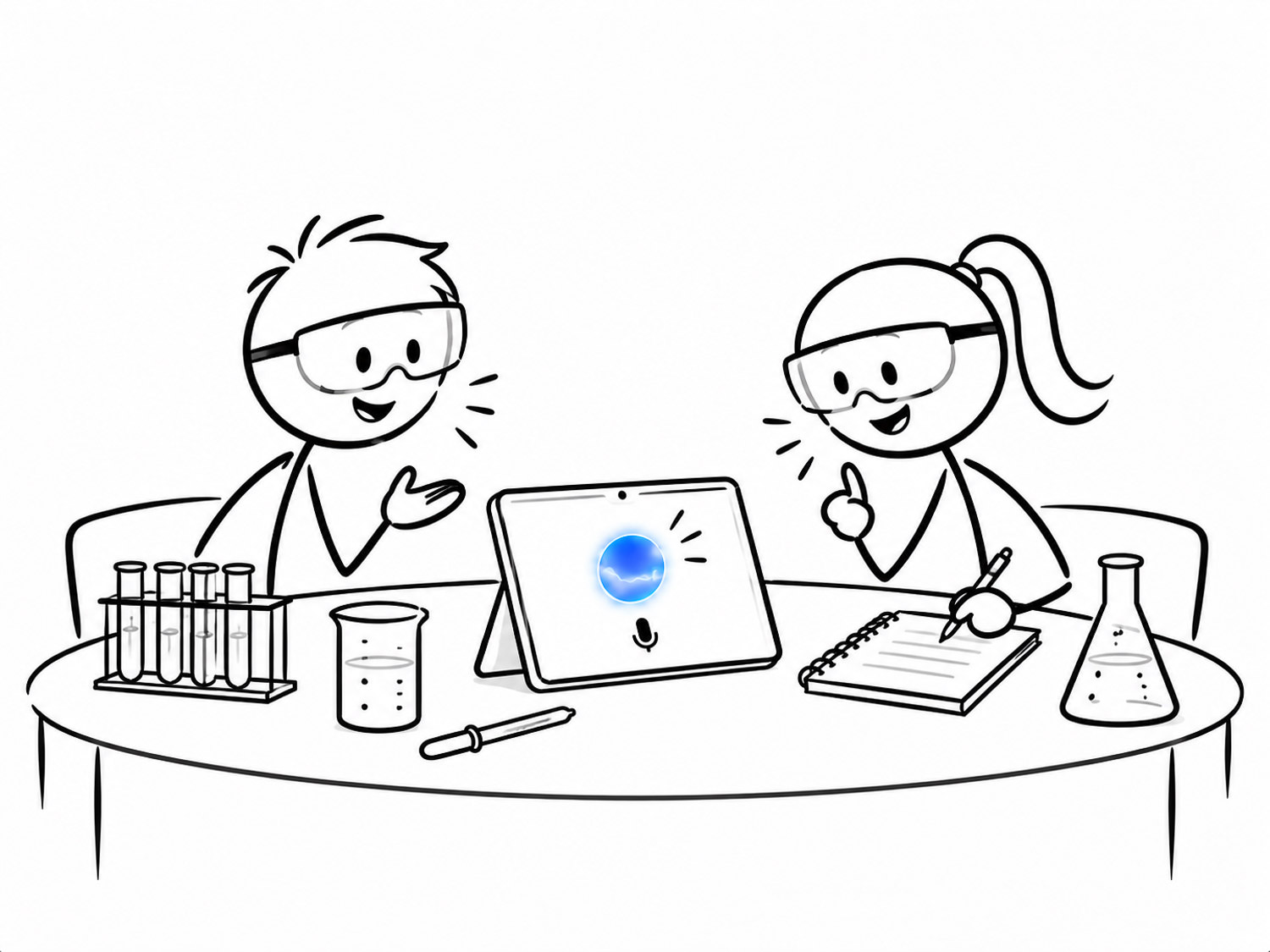
Learners bring different prerequisites and needs. EVA therefore does not assume that everyone learns in the same way.
With EVA Voice, the learning dialogue under “Talk to EVA” can be conducted entirely through speech. Learners can ask questions aloud, talk with EVA and listen to its responses.
EVA also provides different linguistic pathways. EVA, the learning environments and the associated content are fully available in both German and English. This allows the same learning objective to be explored in different language contexts.
For EVA, inclusion means providing different pathways and appropriate support within a shared learning objective.
You remain in control of the teaching. EVA supports learning within the framework you define. Learning goals, materials, tasks and the teaching scenario remain in your hands. EVA does not take over lesson planning or pedagogical decision-making.
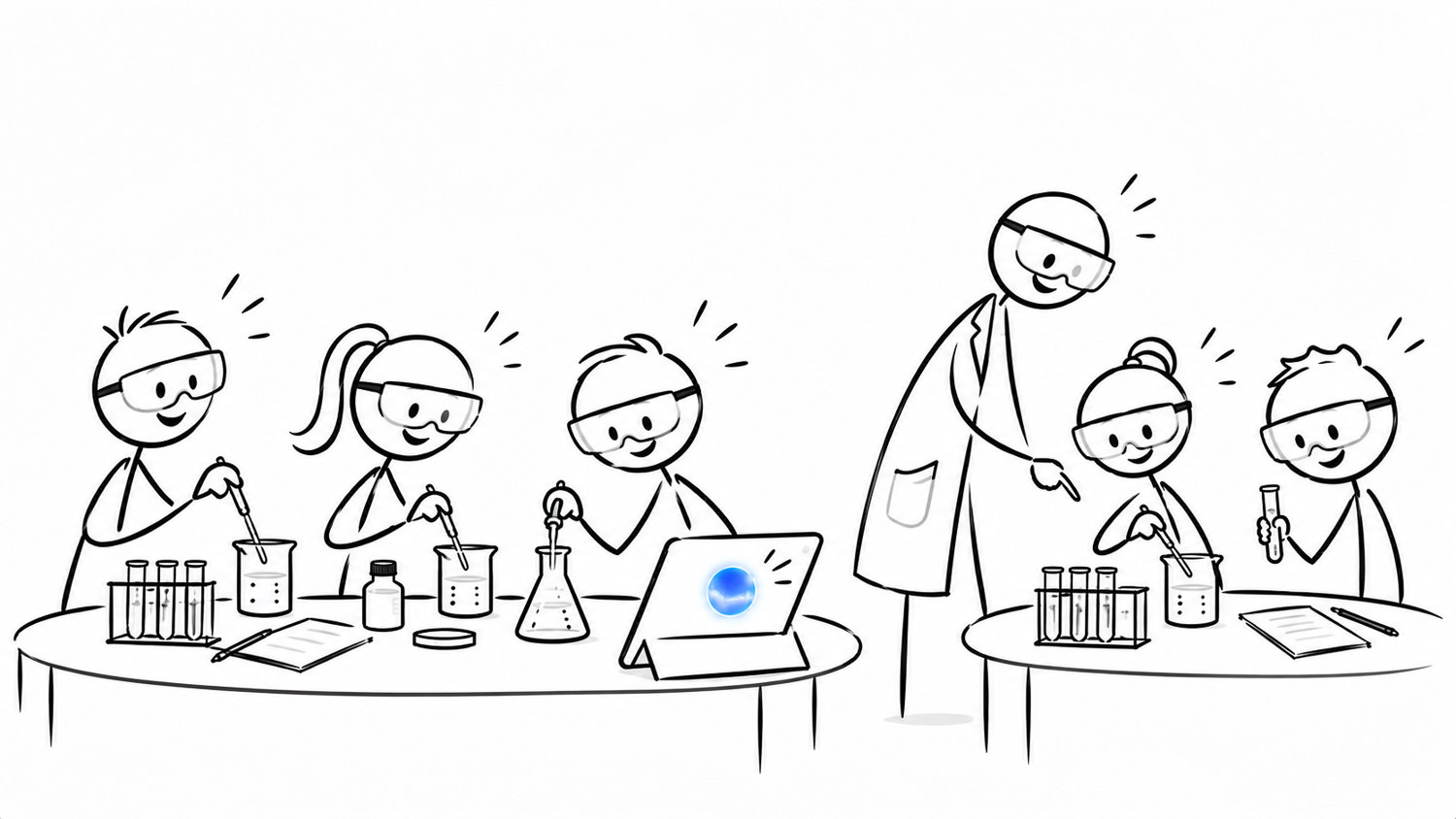
Its value becomes particularly visible when many learning processes are happening at the same time. While students are experimenting, analysing data, calculating or developing explanations, EVA can provide additional individual support.
Questions do not have to wait until the teacher reaches the table, and support can be adapted more closely to the learner’s current needs.
EVA can extend the possibilities for individual learning support without replacing the teacher.

SPACELABS and EVA are free to use – and will remain free. Simulations can be opened directly by teachers and students without an account.
Teachers create a free SPACELABS account to access teaching materials and set up EVA for their classes. They select a material or simulation, define the learning group and the period of access, and then generate a six-digit access code and QR code.
Students use the code or QR code to access EVA directly. No individual student account is required. Students do not need to provide their personal information in order to work with EVA.
As much independent insight as possible.